Workspace organization and comfort
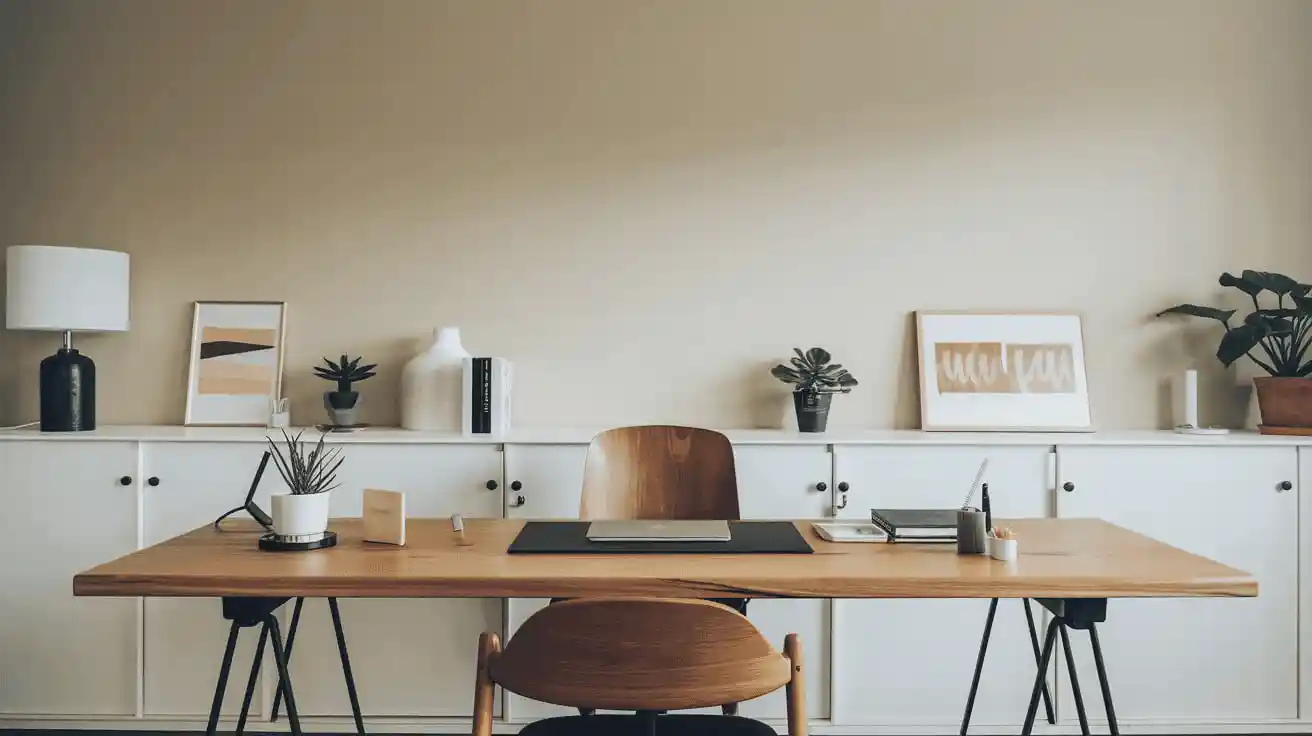
Reviewing desk layout, monitor placement, seating position, and workspace flow to support a calm, organized environment that reduces unnecessary strain.
Explore setup principlesWorkspace Ergonomics
Practical guidance for organizing your workspace, building balanced daily routines, and maintaining physical ease throughout the working day.
Three Focus Areas
Three core areas guide every ergonomics consultation — from the physical layout of your workspace to how you move and rest during the day.
Reviewing desk layout, monitor placement, seating position, and workspace flow to support a calm, organized environment that reduces unnecessary strain.
Explore setup principlesUnderstanding how sitting position and movement patterns affect physical ease during the working day, with practical approaches for varied posture throughout sessions.
Explore movement principlesStructuring focus periods, intentional breaks, and end-of-day routines in a way that supports a steady, comfortable pace rather than relentless output.
Explore rhythm conceptsWorkspace Comfort Check
Select the option that best describes your current experience. We'll offer a brief practical direction based on your choice.
Workstation Setup
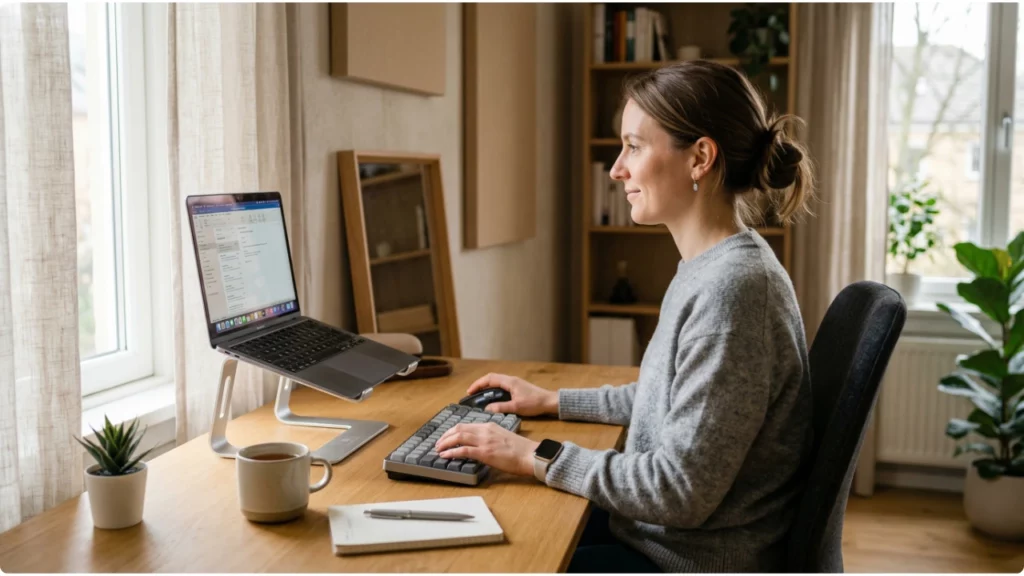
The physical arrangement of your workspace — monitor height, desk depth, keyboard position, and lighting direction — creates the conditions for a comfortable workday.
Why it matters
8 hrs
Average daily time spent at a desk
3 zones
Workspace, movement, and rest — each matters
30 min
Recommended interval for posture variation
5 steps
Core setup adjustments for everyday comfort
Daily Rhythm
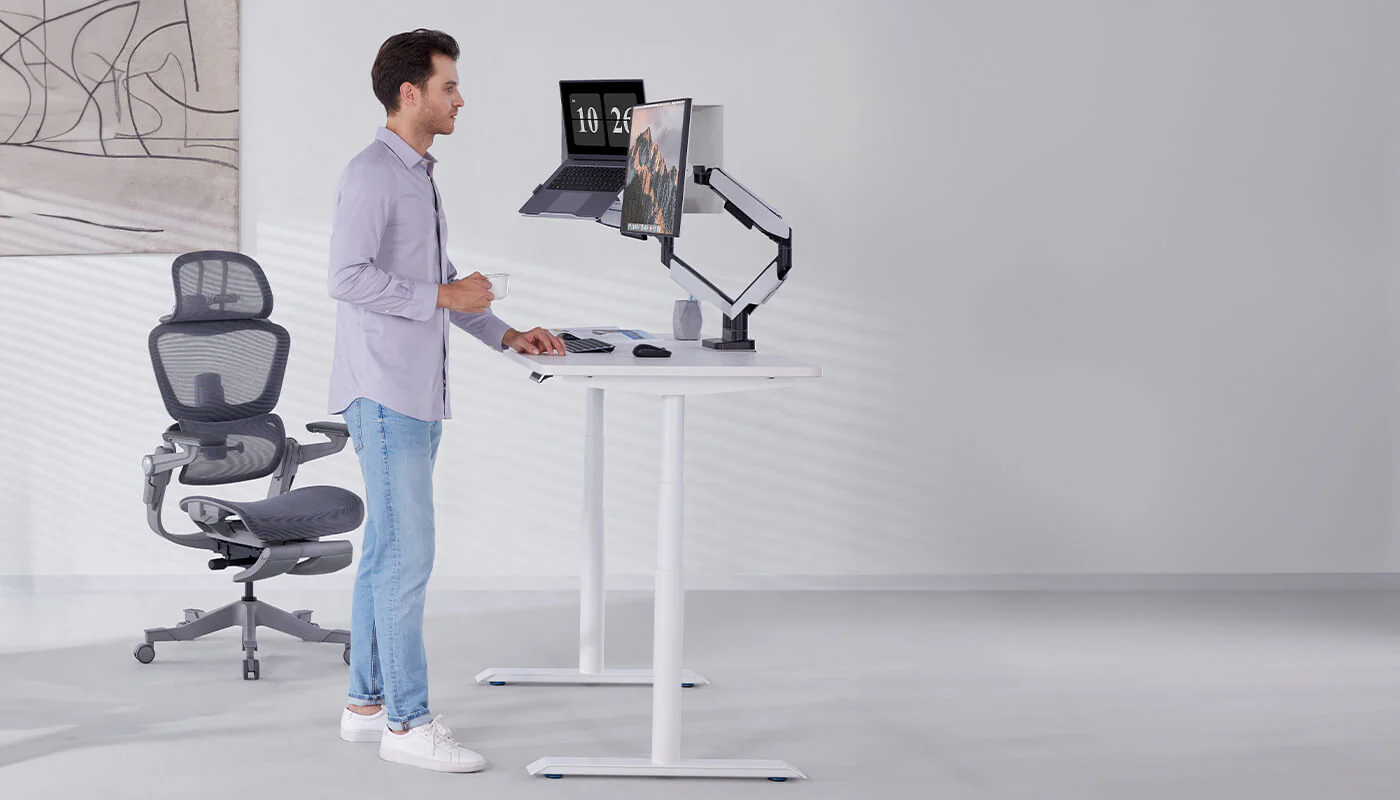
Alternating between focused work blocks, brief movement pauses, and genuine rest periods is one of the most practical approaches to maintaining physical comfort throughout the day.
Where to Begin
Start with the guide most relevant to your current workspace experience.
Practical concepts for setting up and adjusting your physical workspace — monitor, chair, desk, lighting — for everyday comfort.
Open the guideApproaches to posture variety, intentional movement patterns, and structuring a work day that feels sustainable and physically balanced.
Open the guideInformational note: All materials and practices presented here are educational and informational in nature, aimed at supporting general well-being. They do not constitute medical diagnosis, treatment, or advice. Before applying any practice, especially if you have chronic conditions, consult a qualified healthcare professional.